The Care Label Is a Starting Point, Not a Ritual
Care labels help you match garment care to its material and use, so you can avoid needless washing, preserve useful details, and choose sensible repairs.
How should you care for a garment without turning laundry into a small laboratory? A care label is a useful starting point, not a script every shirt, sweater, and coat must follow in exactly the same way. Read its symbols alongside the garment’s materials, construction, and actual wear.
Read symbols as limits
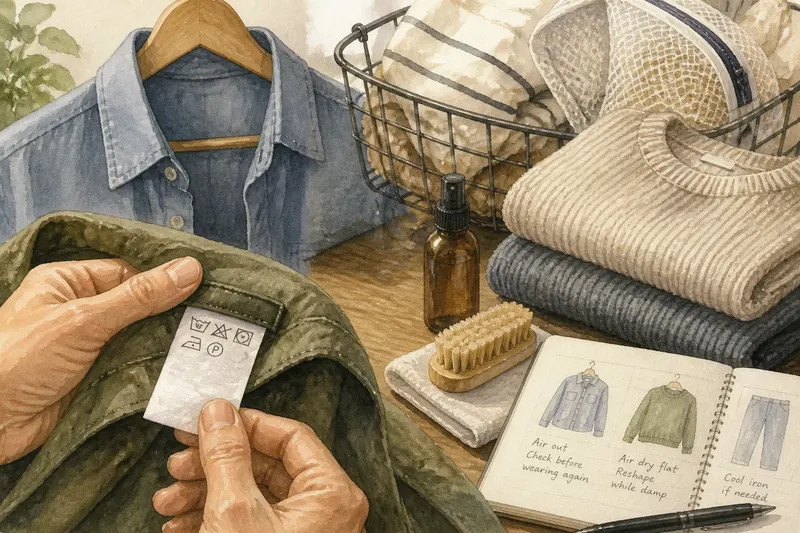
Care symbols describe the kinds of treatment a garment can tolerate: washing, bleaching, drying, ironing, and professional cleaning. A crossed-out symbol rules out that treatment; a lower heat or gentler setting signals restraint. The label does not tell you how often the item needs cleaning, or whether it is dirty now.
Look at the whole row rather than focusing on one familiar icon. A washing symbol and a drying symbol give different instructions, and a garment may tolerate one process while being poorly suited to another. If the label is faded or missing, check the manufacturer’s care information if available, then consider the fabric and construction conservatively.
Where the right choice depends on the label, manufacturer instructions, or local rules, follow those requirements or ask a qualified cleaner when appropriate. For ordinary household decisions, the symbol set is a boundary, not a ceremonial sequence.
Match care to wear
A garment worn against the skin during a hot day has different needs from a jacket worn briefly over clean clothes. Odor, sweat, visible soil, spills, and contact with skin are more useful clues than a rule that says everything goes into the wash after one wearing.
Air out items that are not soiled, and deal with a fresh mark before it settles. A clean hanger or a broad hook can help a shirt or jacket air between uses; a damp garment needs room to dry rather than being pushed into a crowded closet. These small choices often prevent unnecessary laundering.
Say you wear a cotton overshirt for a short, cool errand and take it off without a spill or noticeable odor. You hang it in a ventilated place and check it before wearing it again; the expected observable result is a garment that smells neutral and has no visible soil, so a wash can wait. If it instead carries food or perspiration, the same garment has a different care need.
Consider the whole garment
Fiber content matters, but it is not the whole story. A lined jacket, a pleated skirt, or a shirt with glued interfacings may respond differently from a plain piece made from a similar fabric. Buttons, trims, prints, elastic, and shaping can all affect what care is sensible.
Check the inside seams and closures before washing. Fasten hooks and zippers that might snag neighboring fabric, empty pockets, and turn printed garments inside out if that suits the label and item. A mesh laundry bag can contain small or delicate pieces, but it does not make an unsuitable wash method suitable.
When a garment combines materials, use the care needs of its most vulnerable part as a practical constraint. A sturdy cotton shell does not cancel out a delicate lining. If a structured or valuable piece has unclear instructions, a cleaner familiar with that type of garment can help you choose between cleaning options.
Choose the needed wash
When washing is appropriate, use a method that fits both the label and the kind of soil. A full load of everyday clothes may suit a regular cycle; a lightly worn delicate item may call for a gentler approach. Separate colors when dye transfer is a concern, and avoid crowding the washer so detergent and water can move through the clothes.
Use detergent according to its directions rather than adding extra in hopes of a more thorough clean. Residue can leave fabric feeling stiff or dull, while more agitation can add wear without solving the actual problem. Treat a localized mark with a compatible product after checking its effect on an inconspicuous area.
There is no virtue in a complicated routine for its own sake. A low-effort choice that follows the label and leaves the garment clean is often more sensible than several extra treatments that add handling but no clear benefit.
Dry with shape in mind
Drying can change how a garment fits and hangs. Heat may be unsuitable for some fibers, elastics, prints, or trims; hanging a heavy wet knit can stretch it. The label’s drying symbol helps set the limits, while the garment’s weight and construction help determine how to support it.
For items suited to air drying, reshape them while damp and give them enough space for air to circulate. A drying rack works for many garments; a flat, clean surface can better support a heavy sweater. If the label permits machine drying, choose settings within its guidance and remove items when they are dry rather than leaving them to tumble without reason.
Before putting a garment away, check that thicker seams, cuffs, and pockets are dry. Dampness trapped in a folded item can create an unpleasant smell and make it harder to tell whether the garment is ready for storage.
Iron only when useful
An iron is a finishing tool, not a required final stage. Some garments look fine after careful drying or hanging. Others need a press to restore a crisp collar or smooth a crease. Let the garment’s purpose and appearance decide whether the extra heat and handling are useful.
Check the ironing symbol and set the iron within its limits. If you are uncertain about a decorative finish or synthetic fabric, test an inconspicuous area first, or use a pressing cloth where appropriate. A steamer may help with light wrinkles, but it is not automatically suitable for every material or construction.
Fold or hang the garment in a way that preserves its shape. Broad hangers can support shoulders better than thin wire ones, while knits often fare better folded than suspended. The useful choice is the one that avoids creating a new crease or stretched shoulder to solve an old one.
Questions about garment care?
How often should I wash a garment?
Wash it when soil, odor, or its type of use makes cleaning necessary, rather than relying on a fixed schedule. Items worn close to the skin may need more frequent washing than outer layers.
What if the care label is missing?
Check the garment maker’s information if you can identify it, then assess the fabric, lining, trims, and structure. When the item is delicate or difficult to replace, seek advice from a cleaner instead of guessing with an aggressive treatment.
Can I spot-clean instead of washing?
Often, if the mark is localized and the fabric and finish tolerate the chosen cleaner. Blot rather than rub, test an inconspicuous area, and stop if the color or texture changes.
Do care symbols tell me how to store clothes?
Usually they address cleaning and finishing, not closet conditions. Store garments clean and dry, and choose a hanger or fold that supports their shape.
Repair small damage early
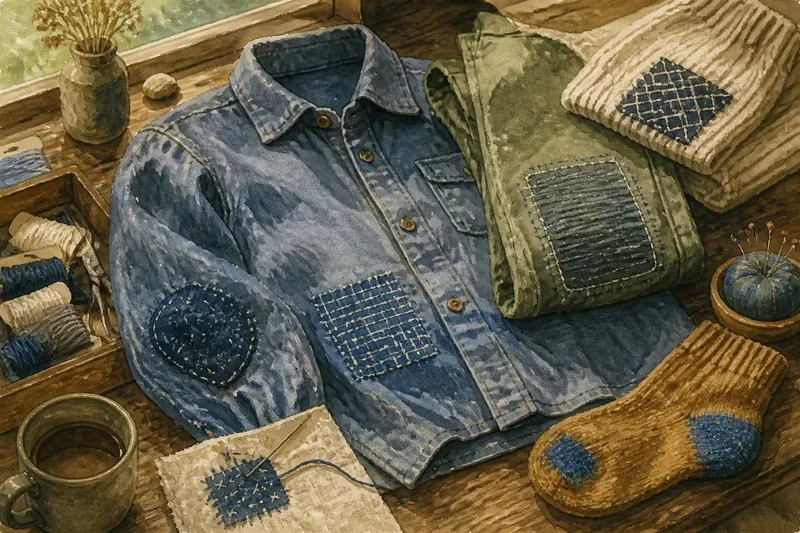
Care includes noticing small problems while they are still manageable. A loose button, a seam beginning to open, or a snag caught early may call for a simple repair rather than another wash or an immediate replacement. Set the garment aside if wearing it could worsen the damage.
For routine issues, match the repair to the garment: sew on a button with suitable thread, secure a small loose seam, or ask a tailor about a difficult closure or lining. Do not improvise around damaged electrical heating elements or other hazards in clothing; stop using the item and consult an appropriate professional if safety is in question.
The care label earns its place by helping you avoid treatments the garment cannot tolerate. For everyday care, read it once, observe how the item is actually used, and give it only the attention its condition calls for. That is a more durable habit than treating every laundry day as a test of devotion.